Engineering case study
Armadyo
A full-stack commerce experience connecting authenticated customer journeys, managed product content, and online checkout.
- My role
- Full-stack developer
- Project type
- E-commerce application
01 — Context
Project overview
Armadyo brings product discovery, customer authentication, content management, and checkout into one commerce experience.
My work focused on integrating the services behind that journey while keeping the customer-facing interface responsive and consistent.
02 — Ownership
What I was responsible for
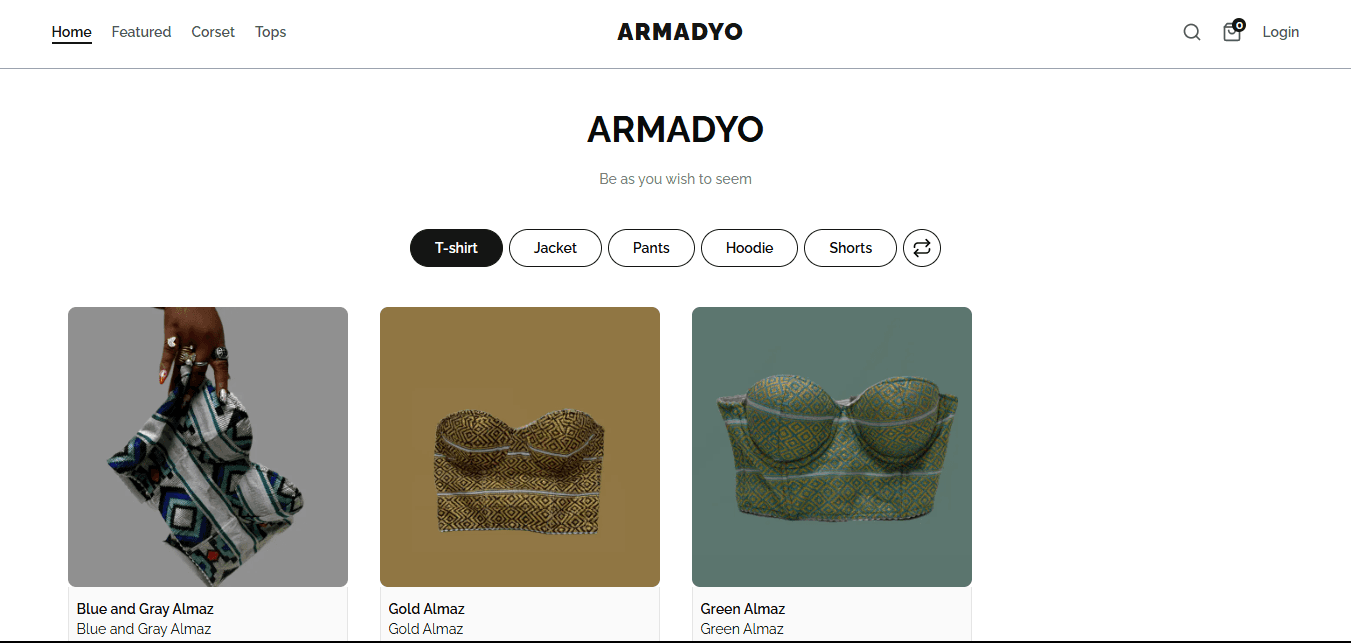
- Built the responsive storefront experience.
- Integrated Clerk for customer authentication.
- Connected Sanity-managed product content to the application.
- Implemented the Stripe checkout flow.
03 — Engineering
Key technical decisions
Managed commerce content
Sanity separates product content from presentation, allowing catalogue information to be managed without editing the application code.
Specialised platform services
Clerk and Stripe handle sensitive identity and payment responsibilities, reducing the amount of custom security-critical infrastructure the application must own.
04 — Problem solving
Challenges and approach
Coordinating external services
The customer journey depends on authentication, content, and checkout systems agreeing on state. The implementation keeps those concerns separate while presenting one coherent flow.
Maintaining interface consistency
Commerce screens have different data and interaction needs. Reusable UI patterns help the catalogue and checkout experience feel like one product.
05 — Delivery
Outcome
The delivered application provides a complete, deployable commerce journey from browsing managed products to authenticated checkout. No public business metrics are available, so this case study focuses on verified implementation scope.
06 — Growth
What I learned
The project reinforced the value of keeping identity, content, payments, and presentation as clear integration boundaries instead of combining them into one tightly coupled feature layer.